

Billing & Cost Sharing
Cost Sharing Basics
Resyrv turns flights, dues, fuel, and payments into a single running ledger per member, so nobody has to argue about who owes what.
The member ledger
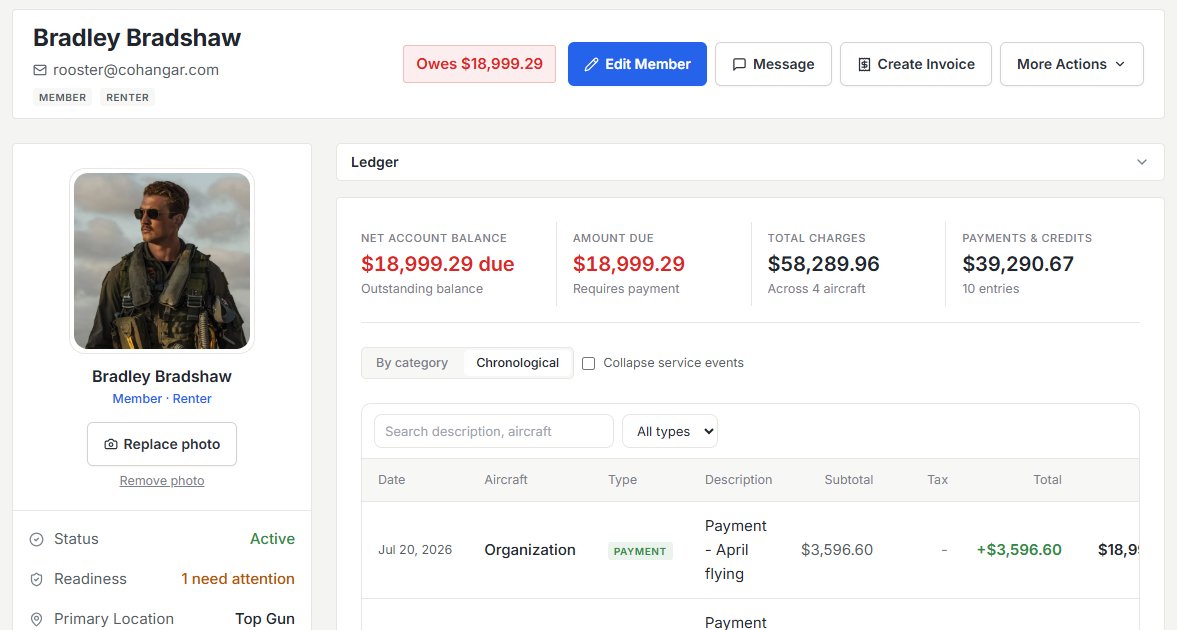
Every charge and every payment lands on a member’s ledger as its own entry. A member’s headline balance is the net of that ledger (flight charges, dues, fuel, packages, payments, and credits), and it’s always current.
Flight charges from the meters
When a flight is logged with start and end meter readings, Resyrv computes the billable time from the meter you configured on the aircraft (Hobbs or tach) and posts the charge at that aircraft’s rate automatically. No one keys in a dollar amount by hand.
Fixed costs versus variable costs
Two kinds of money flow through the ledger:
- Variable - flight time, priced per hour and driven by the meters.
- Fixed - recurring dues, hangar shares, and reserves that post on a schedule regardless of flying.
Most groups use both: an hourly rate that covers wear and reserves, plus monthly dues that cover fixed overhead.
Which aircraft makes money
The Fleet Utilization report shows, per tail, hours flown, dispatches, revenue, operating cost, pro-rated fixed cost, margin, and down days lost to maintenance. Switch the grouping to Aircraft by month and the same numbers become a month-by-month series, so a slow quarter or a tail that quietly stopped earning shows up as a trend.

Wet and dry fuel modes
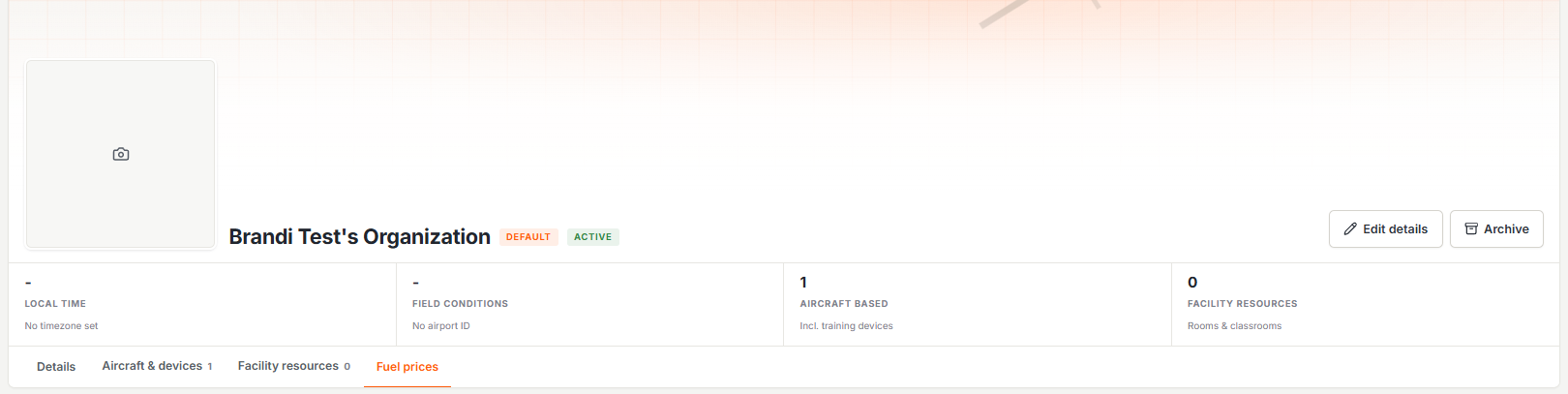
Fuel handling is set once per aircraft. On a wet rate, fuel is baked into the hourly price and there’s nothing more to do. On a dry rate, the hourly charge excludes fuel and members submit fuel receipts for reimbursement, which credits back against their balance.
Was this page helpful?
Can’t find what you need? Contact us - a real person reads every message.