

Maintenance
Squawks & Grounding
Any member can report a problem with an aircraft. Severity says how bad it is; a separate operational effect says what happens to the aircraft while it’s open.
Filing a squawk
Any member can report a squawk against an aircraft from the aircraft page; maintenance staff can also file from the fleet board. Describe the problem and pick a severity:
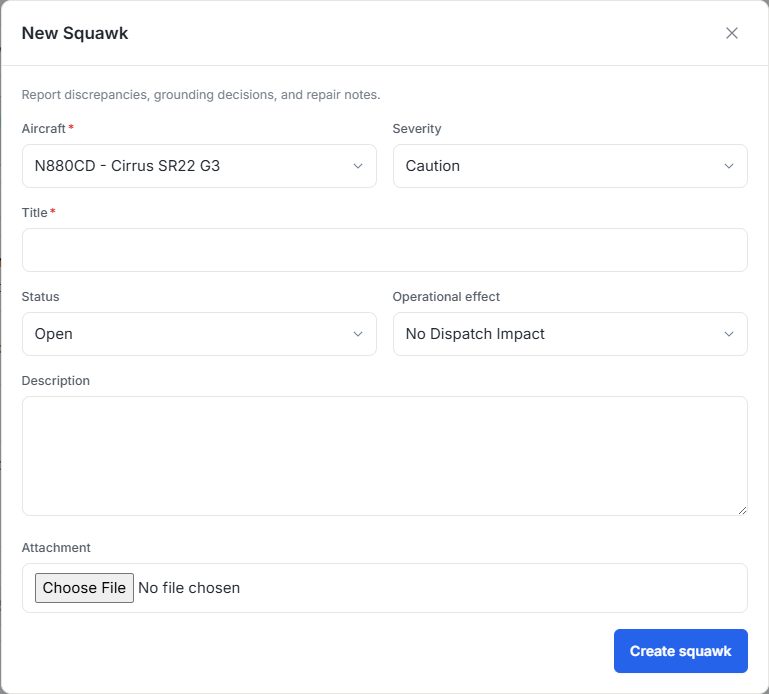
- Info / minor - worth knowing, no operational impact.
- Caution - fly with awareness; maintenance should look at it.
- Critical - a serious defect that likely grounds the aircraft.
Severity vs. operational effect
The grounding decision is deliberately separate from severity. Each squawk carries an operational effect (none, dispatch review, or grounded) that defaults from the severity but can be set explicitly. That means a critical-looking squawk can be downgraded to “dispatch review” after inspection without rewriting history, and a minor one can still ground the aircraft when it should.
The squawk lifecycle
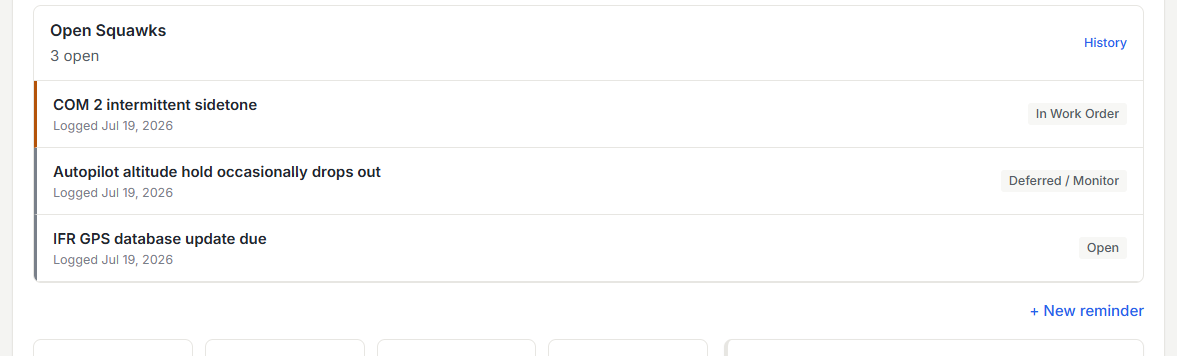
Squawks move through a triage flow: open when filed, triaged once maintenance has assessed it, then either deferred (monitor it), converted into a work order, resolved, or canceled. Resolved and canceled squawks stay in the aircraft’s history.
Grounding an aircraft
A grounded aircraft is blocked from new reservations immediately, and members holding upcoming bookings on it are notified so they can rebook. The schedule shows the aircraft as unavailable rather than silently letting bookings pile up on a broken airplane.
Return to service
Clearing a grounding requires a return-to-service signoff from someone with the maintenance permission. The record shows who returned the aircraft and when.
Was this page helpful?
Can’t find what you need? Contact us - a real person reads every message.